
The short answer
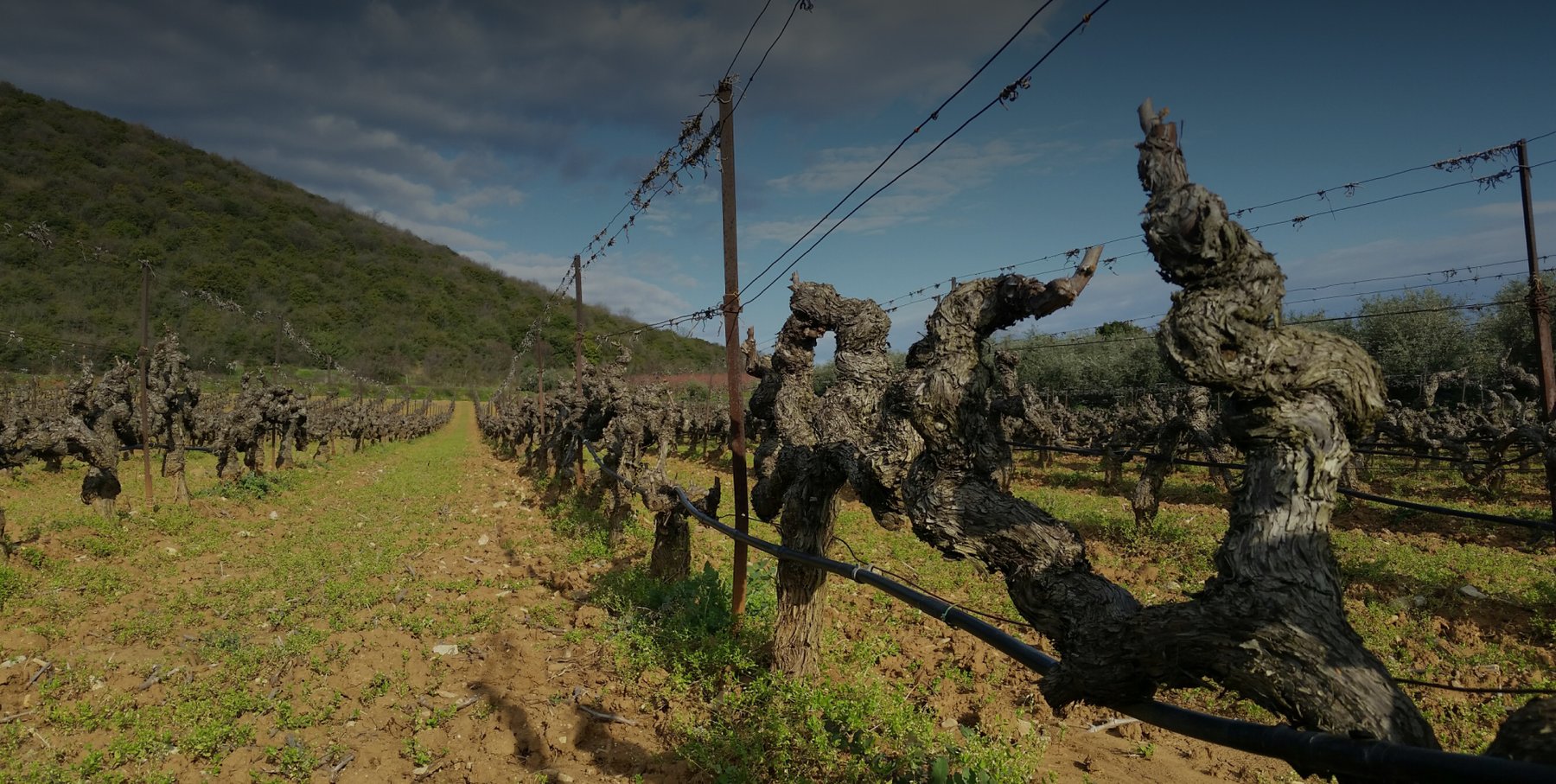
PDO Naoussa is Greece’s oldest and most internationally celebrated red wine appellation. Established in 1971, it sits on the south-eastern slopes of Mount Vermion in Northern Greece and is planted exclusively with Xinomavro — the country’s most structured, most ageworthy, and most Nebbiolo-adjacent indigenous red grape. For anyone building a serious Greek wine programme, Naoussa is the anchor.
The place
Naoussa sits in the Imathia regional unit of Central Macedonia, about 90 km west of Thessaloniki. It is a compact appellation spread across a broad amphitheatre on the south-eastern slopes of Mount Vermion, with vineyards climbing from about 150 metres on the valley floor to about 400 metres on the higher terraces.
Three terroir factors define the wines:
- Altitude. The eastern-facing slopes provide diurnal temperature swings — warm afternoons, cool nights, an essential ingredient for Xinomavro’s preservation of acidity.
- Soils. A mosaic of sandy-loam, clay-limestone and iron-rich clays. Different producers work vineyards with quite different substrata, and the wines reflect it.
- Continental influence. Naoussa is far enough from the sea to have a genuinely continental climate — cold winters, warm dry summers, and a distinct autumnal cool-down that Xinomavro needs to ripen its late-maturing skins.
The result is a cool-climate red wine grown at moderate elevation in Northern Europe latitudes — closer in feel to Piedmont or Burgundy than to the sun-baked Mediterranean.
The Xinomavro comparison to Nebbiolo
Xinomavro — literally “sour-black” in Greek — is Northern Greece’s flagship red grape and the sole variety of PDO Naoussa. Its structural profile is remarkably similar to Piedmont’s Nebbiolo:
| Feature | Xinomavro (Naoussa) | Nebbiolo (Barolo) |
|---|---|---|
| Colour | Pale to medium ruby, garnet with age | Pale to medium ruby, garnet with age |
| Tannin | Very high, firm | Very high, firm |
| Acidity | Very high | Very high |
| Aromatics | Sour cherry, dried tomato, olive, herbs, leather with age | Sour cherry, tar, rose, truffle, tobacco with age |
| Ageing | 15–30+ years for top cuvées | 20–40+ years for top cuvées |
| Colour deception | Wines look lighter than they taste | Wines look lighter than they taste |
International writers — Jancis Robinson MW, Karen MacNeil, Konstantinos Lazarakis MW — have all drawn the comparison. Xinomavro is now sometimes marketed abroad as “the Greek Nebbiolo”, though the aromatic details diverge (Naoussa leans savoury-Mediterranean; Barolo leans floral-truffled).
The villages and terroir mosaic
PDO Naoussa does not have formally demarcated sub-appellations, but growers and importers recognise a cluster of important villages and vineyard zones:
- Naoussa town and its immediate slopes — historically the heart of the appellation.
- Yiannakochori (Γιαννακοχώρι) — higher altitude, cooler, gives the freshest, most structured Xinomavro; a favourite of the modern generation.
- Trilofos (Τρίλοφος) — clay-rich, generous fruit.
- Fytia (Φυτεία) — mid-altitude, balanced classic profile.
- Rodochori (Ροδοχώρι) — smaller area, high-altitude vineyards.
Because Naoussa is small enough that single-vineyard wines are increasingly common, the individual site (rather than the village) often does most of the talking.
Styles of PDO Naoussa
The appellation covers several legally defined categories:
- PDO Naoussa (red, dry): the standard. Minimum 12 months ageing before release.
- PDO Naoussa Reserve: at least 24 months total ageing, minimum 12 months in oak.
- PDO Naoussa Grand Reserve: the longest-aged category — at least 36 months total, minimum 18 months in oak. Often from top single-vineyard sites.
A separate PGI Imathia designation covers wines that fall outside the strict PDO rules — for example, Xinomavro-Merlot blends or non-traditional vinification.
Leading producers
Naoussa’s modern quality revival has been driven by both historic estates and a new generation of organic and single-vineyard specialists. Names that consistently deliver:
- Boutari — the historic house (founded 1879) whose Grande Reserve Naoussa is one of the reference-defining wines of the appellation; a benchmark of the classical Naoussa style.
- Domaine Thymiopoulos — Apostolos Thymiopoulos’s biodynamic estate at Trilofos; his approach — lower alcohol, fresher fruit, terroir-focused — has redefined what a modern Naoussa can be internationally.
- Domaine Foundi — a small, family-run producer of traditional, highly perfumed Naoussa; a cult name among Xinomavro specialists.
- Karydas Estate — a tiny estate of around 2.5 hectares planted only with Xinomavro; resolutely traditional, hand-harvested wines.
- Ktima Kir-Yianni — the Boutaris-family estate at Yiannakochori, working across both Naoussa and Amyntaio; the single-vineyard Ramnista is one of the most internationally recognised Xinomavro wines.
- Domaine Diamantakos — old vines, minimal-intervention winemaking; a producer’s producer.
- Argatia — a newer estate championing the appellation’s future while respecting its traditions.
Most estates welcome visitors with advance booking and offer tastings at the cellar door. Naoussa is compact enough to visit several producers on the same day.
What to taste on a first visit
A first serious Naoussa tasting should aim to cover:
- A young standard PDO Naoussa — to taste the grape’s natural acidity and tannin.
- A Grand Reserve with 10+ years of bottle age — to see what mature Xinomavro really becomes (dried tomato, leather, forest floor).
- A modern-style Naoussa — often lower in alcohol, fresher, more overtly fruit-driven; the direction the appellation is moving.
- A single-vineyard Naoussa — to understand how Yiannakochori, Trilofos or the higher altitudes give recognisably different wines.
At the table
Xinomavro is famously acidic and tannic when young, and needs food to show its best. Classic pairings:
- Roast lamb with rosemary and garlic — the Greek Sunday institution.
- Slow-braised beef stews (stifado, kokinisto), oxtail with red wine.
- Wild game (venison, boar) — Naoussa is one of the great game wines of Europe.
- Aged hard cheeses — kefalotyri, aged graviera, parmesan, manchego.
- Wild mushroom risotto or truffle dishes for older, tertiary-driven Naoussa.
- Charcuterie — cured meats, aged salamis with fat that softens the tannin.
Aged Naoussa (15+ years) is remarkable with truffle, aged goose, and rich game preparations. A serious dinner-table wine.
How Naoussa compares to Nemea
The two great Greek red regions produce stylistically opposite wines:
| Region | Grape | Profile | Best for |
|---|---|---|---|
| Naoussa (north) | Xinomavro | High acid, high tannin, structured, ageworthy | Serious cellar, game, aged cheeses |
| Nemea (Peloponnese) | Agiorgitiko | Softer, rounder, cherry-fruit, food-friendly | Everyday drinking, roast meats, pasta |
A serious Greek wine programme almost always includes both — they are complementary rather than competing. For a deeper introduction to how they compare glass-to-glass, see our Xinomavro vs Agiorgitiko comparison.
Visiting Naoussa: practicalities
- Distance from Thessaloniki: ~90 km, about 1 hour by car.
- Best season: September–October (harvest, vineyards full of fruit) or late spring.
- Base: Naoussa town has good hotels; Thessaloniki is an easy day-trip base for those combining wine with the city.
- Booking: call producers 2–3 days in advance; some estates require it. English is spoken widely at the leading estates.
- Combine with: the Royal Tombs of Vergina (Aigai, UNESCO), the archaeological site of Pella (Alexander the Great’s capital), and Edessa’s waterfalls.
Why it matters
For sommeliers and importers, Naoussa is the essential Northern Greek anchor on any serious Greek wine list. The wines age. They match world-class food. They now sit comfortably alongside Barolo, aged Rioja Gran Reserva, or Bandol on a tasting menu.
For wine lovers, Naoussa is the reminder that Greek wine is not only Mediterranean and easy-drinking. At altitude, from indigenous grapes, with continental discipline, it produces some of the most structured, savoury, cellar-worthy reds in Europe — at prices that still lag well behind their quality peers in Italy or Spain.
Find the perfect Greek wine for what you’re eating
Use e-SOM, our digital sommelier, to pair Greek wine with your food — or even with your mood. Free, fast, available in English and Greek.
See also: What Is Xinomavro? · Nemea: A Complete Guide · Xinomavro vs Agiorgitiko · PDO and PGI Wines of Northern Greece, Under the Acropolis