
The short answer
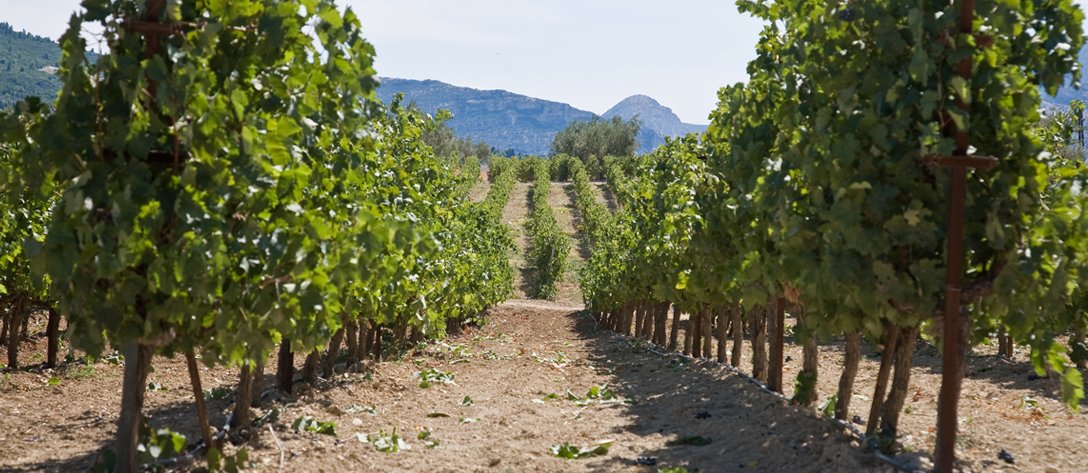
PDO Nemea is Greece’s largest red wine appellation, and arguably its most important. Located in the northeastern Peloponnese around the ancient site of Nemea, the appellation is planted exclusively with Agiorgitiko, the country’s most widely cultivated indigenous red grape. Its three altitude zones (low valley, mid-slope, and high mountain) give the region a stylistic range comparable to Côte de Beaune or Chianti Classico: a single grape, many distinct expressions.
The place
Nemea sits about 100 km south-west of Athens, in the Corinthia region of the northeastern Peloponnese. The drive from the Greek capital takes under two hours and crosses the Corinth Canal, a useful piece of orientation, because Nemea is the first major wine region you reach in the Peloponnese.
The appellation spreads across the foothills of Mount Killini and the broader Nemea valley. The landscape moves quickly from olive groves at lower altitudes to oak and pine forests on the upper slopes. Officially recognised as a PDO (originally an AOC) in 1971, it is one of Greece’s oldest demarcated wine zones.
Ancient Nemea: the cultural backdrop
The region’s name comes from Ancient Nemea, the site of the Nemean Games, one of the four pan-Hellenic athletic festivals of antiquity, alongside the Olympic, Pythian and Isthmian games. The valley is also the mythological setting where Heracles slew the Nemean Lion as the first of his Twelve Labours. The connection to Agiorgitiko is more than romantic: the grape’s regional folk-name, “Aima Hercules” (Blood of Heracles), is older than most modern appellations.
For wine travellers, the archaeological site of Nemea (with its temple of Zeus, stadium, and well-preserved ruins) sits in the middle of the wine country. Most producers are within a 30-minute drive.
The three altitude zones
The defining feature of PDO Nemea is the dramatic altitude range across the appellation. The same grape variety, Agiorgitiko, produces strikingly different wines depending on where it is planted.
Low zone (250–450 m)
The valley floor and the area around Ancient Nemea itself. Warmer days, riper grapes, more concentrated fruit, fuller body. Historically this is where the sweetest, most extracted Nemea wines came from, and the only zone where the traditional sun-dried sweet Nemea is still made by a handful of producers.
Mid zone (450–650 m)
The classical heart of Nemea, including the village of Koutsi. Wines from this band give the archetypal PDO Nemea profile: ripe red cherry, plum, a touch of sweet spice, medium-full body, soft but defined tannins, and a finish that runs from herbal to savoury. Most internationally recognised Nemea reserves come from these elevations.
High zone (650–850 m)
The cooler, higher villages, most famously Asprokampos, the highest at around 800 metres. These wines are noticeably fresher, leaner, more savoury: red-cherry rather than black, with brisker acidity, lower alcohol, and a more international, almost Burgundian feel. This is the zone international writers have most often compared to high-altitude Pinot Noir territory.
A producer who works grapes from more than one altitude zone, and many of the leading estates do, can offer the region’s full stylistic range in a single tasting.
Styles of PDO Nemea
The appellation covers several legally defined categories:
- PDO Nemea (red, dry): the standard. Aged a minimum of 12 months before release.
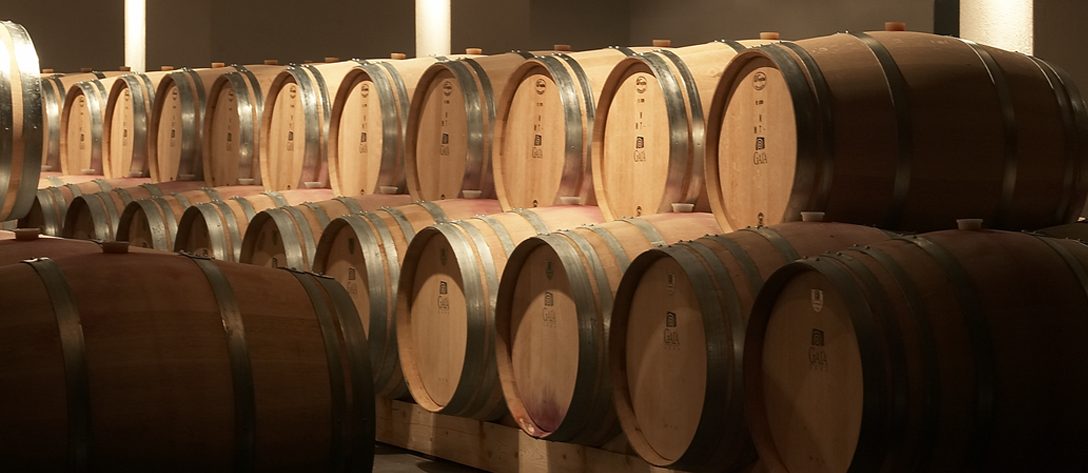
- PDO Nemea Reserve: longer ageing, typically 18-24 months including oak.
- PDO Nemea Grand Reserve: the longest-aged category, at least 36 months total, often from single vineyards.
- PDO Nemea (sweet): rare today, made from sun-dried Agiorgitiko grapes. Intensely concentrated, with dried cherry, fig and spice.
A separate PGI Corinthia designation covers blends and varietal wines that fall outside the strict PDO rules.
Leading producers to visit
Nemea’s producers are concentrated within and around the appellation, making the region one of the most rewarding in Greece for a single-day visit. Names that consistently deliver:
- Gaia Wines, Nemea pioneers and PDO innovators; their high-elevation Estate Nemea is a long-standing benchmark for what serious mid-altitude Agiorgitiko can be.
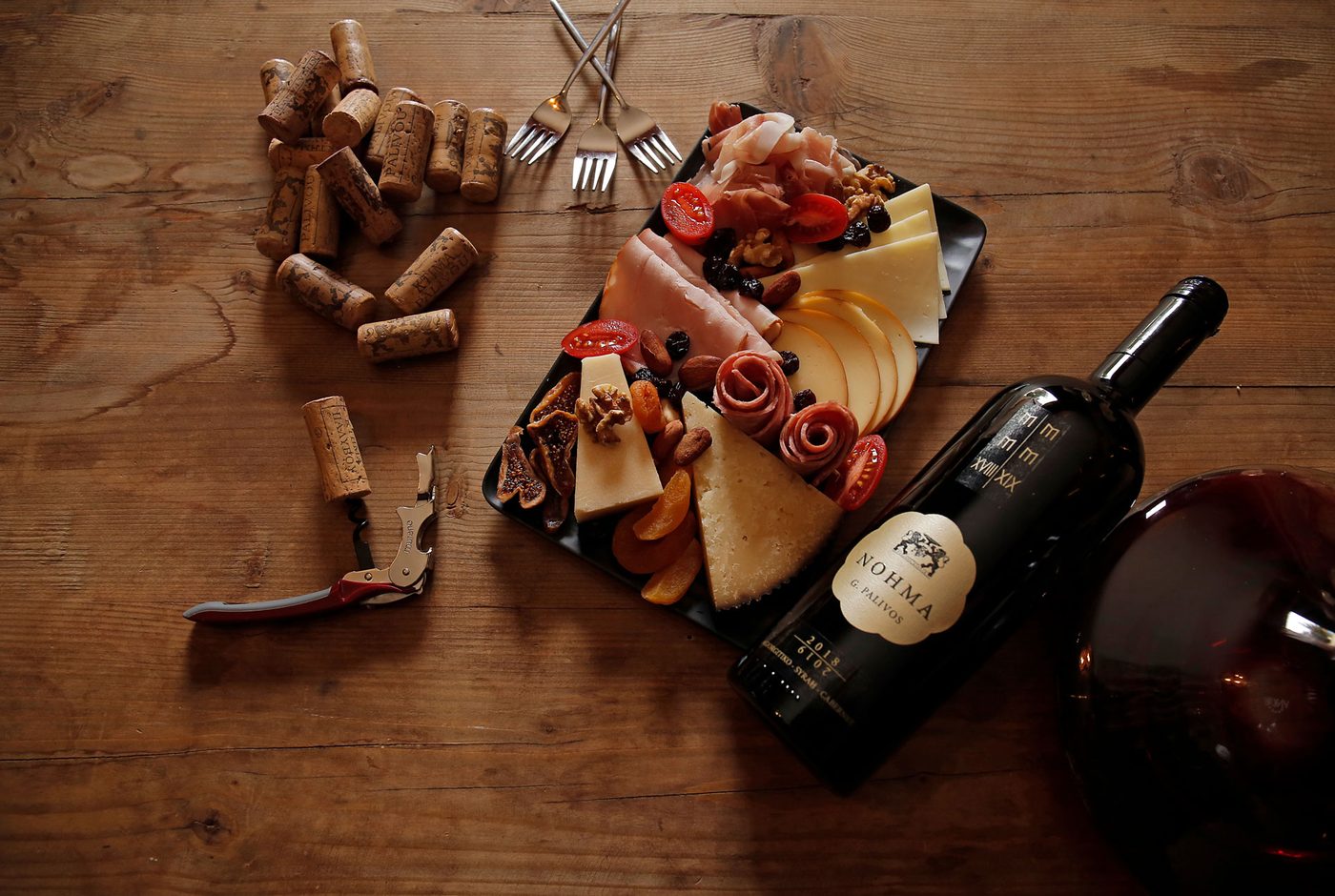
- Domaine Palyvos (Ancient Nemea), family-run, practising sustainable viticulture; produces rich, deeply terroir-driven wines with a particularly clear sense of place.
- Zacharias Winery, a quietly excellent name that has become a Nemea reference in recent years; precise, modern winemaking with a strong attachment to the appellation’s heritage.
- Domaine Papaioannou (Ancient Nemea), long-established, single-vineyard focused; widely considered one of the most authentic estates in the appellation, with a strict commitment to traditional Agiorgitiko expression.
- Aivalis Estate, a small, family-run, cult-favourite producer focused on single-vineyard expressions and minimal-intervention winemaking.
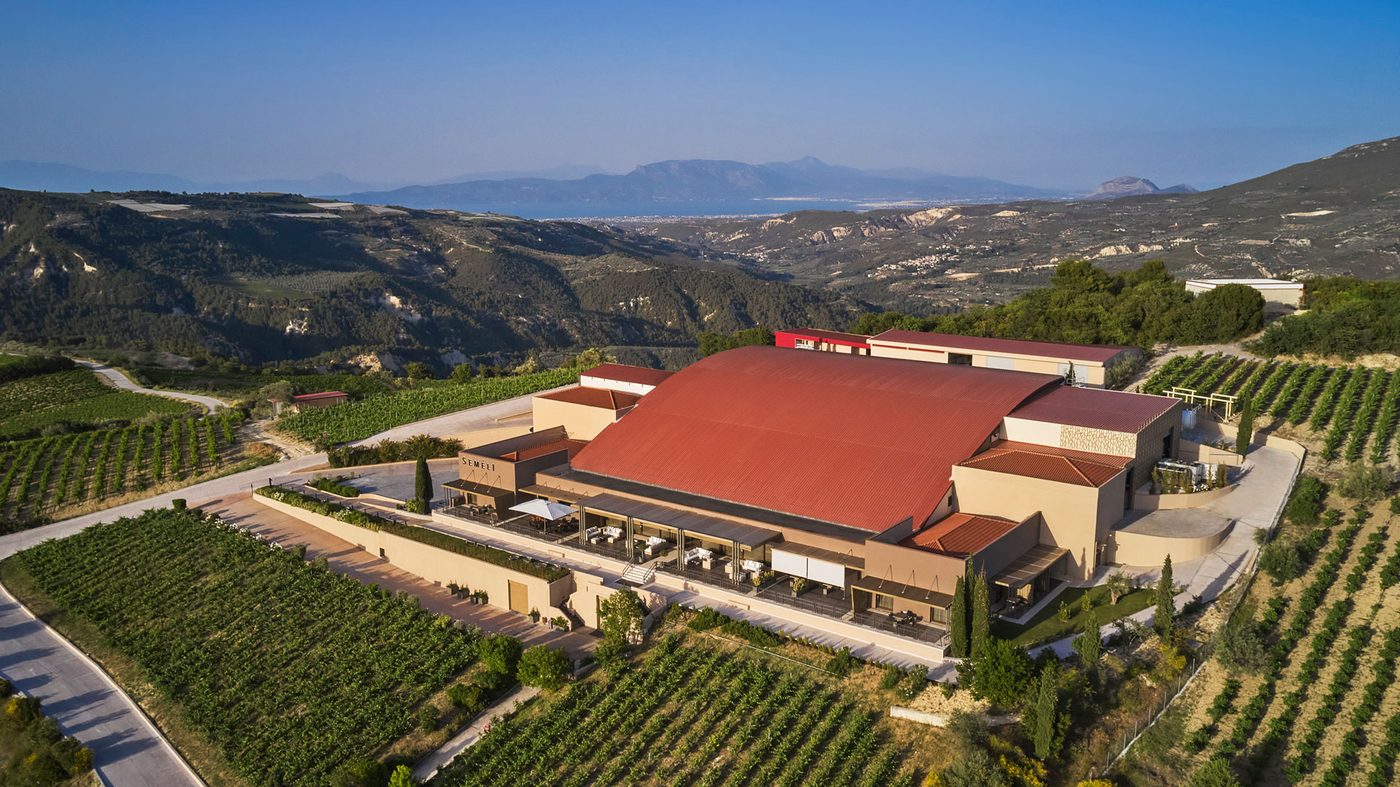
- Ktima Semeli, a beautifully sited estate with one of the most visit-worthy cellar doors in the Peloponnese; their Nemea wines range from accessible everyday bottlings to serious cellar-worthy reserves.
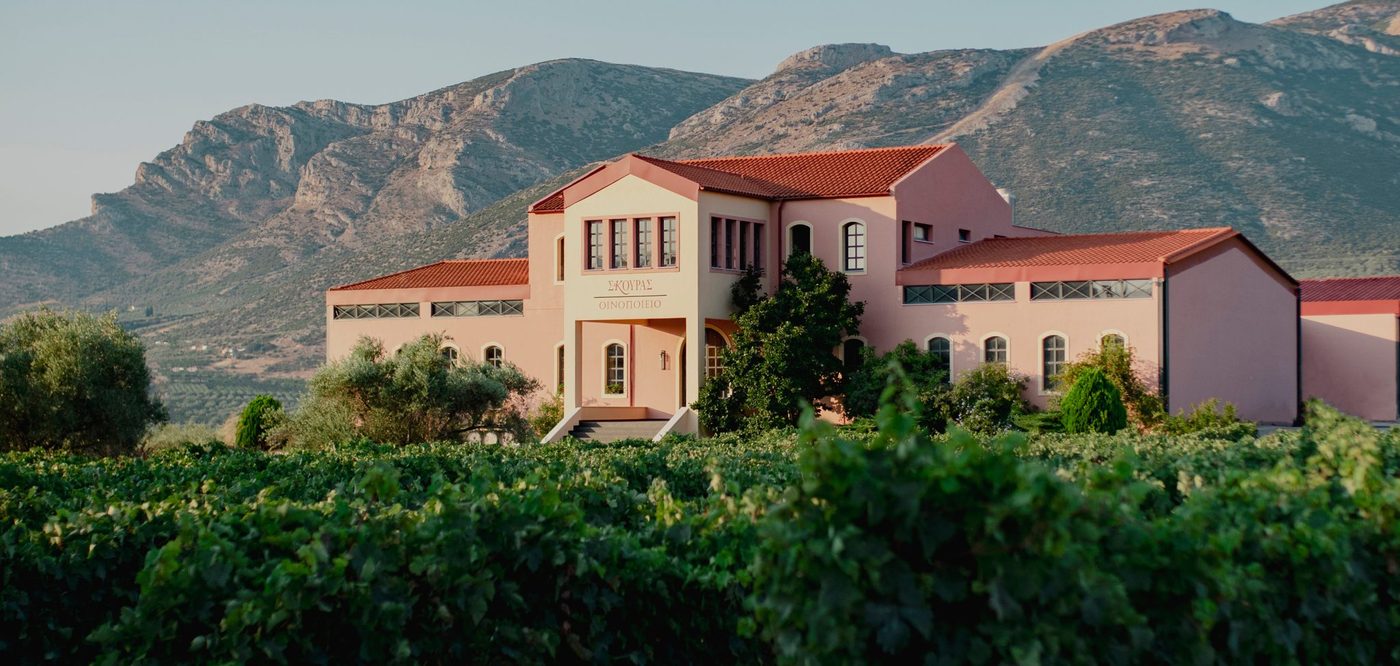
- Domaine Skouras (Argos, just outside the PDO), modern, polished Agiorgitiko; the Megas Oenos (a Cabernet Sauvignon / Agiorgitiko blend) is one of Greece’s most internationally recognised reds.
- Domaine Tselepos, based in nearby PDO Mantineia but with substantial Nemea vineyard holdings; the Driopi sub-label is exemplary Agiorgitiko and an essential reference for visitors building a Nemea understanding.
Most estates welcome visitors with advance booking and offer tastings at the cellar door.
What to taste
A first visit should aim to cover:
- A young, fresh Agiorgitiko, to taste the grape’s natural cherry-fruit charm.
- A classic PDO Nemea (Reserve), to understand the appellation style.
- A high-zone single vineyard, to grasp the cooler-climate, more savoury possibilities.
- If available: a sweet sun-dried Nemea, for the historical context.
At the table
Agiorgitiko is famously food-friendly. With a Nemea wine, the classics work:
- Roast lamb (a Greek Sunday institution).
- Slow-braised beef with red sauce.
- Greek pasta dishes, pastitsio, baked giouvetsi.
- Wood-fired pizza (Nemea is the Greek pizza wine of choice).
- Aged hard cheeses, graviera, aged kefalotyri, parmesan.
For producers planning international export menus, Nemea Reserve is the single most versatile Greek red for matching to a hospitality wine list across cuisines.
How does Nemea relate to Naoussa?
The two great Greek red regions sit at opposite ends of the country and produce stylistically opposite wines:
- Naoussa (north) produces Xinomavro: high-acid, high-tannin, structured, often austere when young, capable of decades in the cellar.
- Nemea (south) produces Agiorgitiko: softer, rounder, more immediately approachable, with more variation by altitude than by oak.
A serious Greek wine programme almost always includes both. They are not rivals, they are complementary.
Visiting Nemea: practicalities
- Distance from Athens: ~100 km, 1h 45min by car.
- Best season: late spring (May–June) or September (harvest period, vineyards full of fruit).
- Combine with: ancient Mycenae, the archaeological site of Epidaurus, or a coastal stop at Nafplio, Greece’s first modern capital and one of its most beautiful towns.
- Booking: call producers a few days in advance; most welcome visitors but few are walk-in.
- Where to stay: Nafplio is the ideal base, an hour’s drive from the appellation.
For a deeper introduction to the grape itself, read What Is Agiorgitiko?, and for the head-to-head comparison with Greece’s other great red, see Xinomavro vs Agiorgitiko.
Find the perfect Greek wine for what you’re eating
Use e-SOM, our digital sommelier, to pair Greek wine with your food, or even with your mood. Free, fast, available in English and Greek.
See also: What Is Agiorgitiko? · Xinomavro vs Agiorgitiko · Seven Greek Wineries Every Wine Lover Should Know