
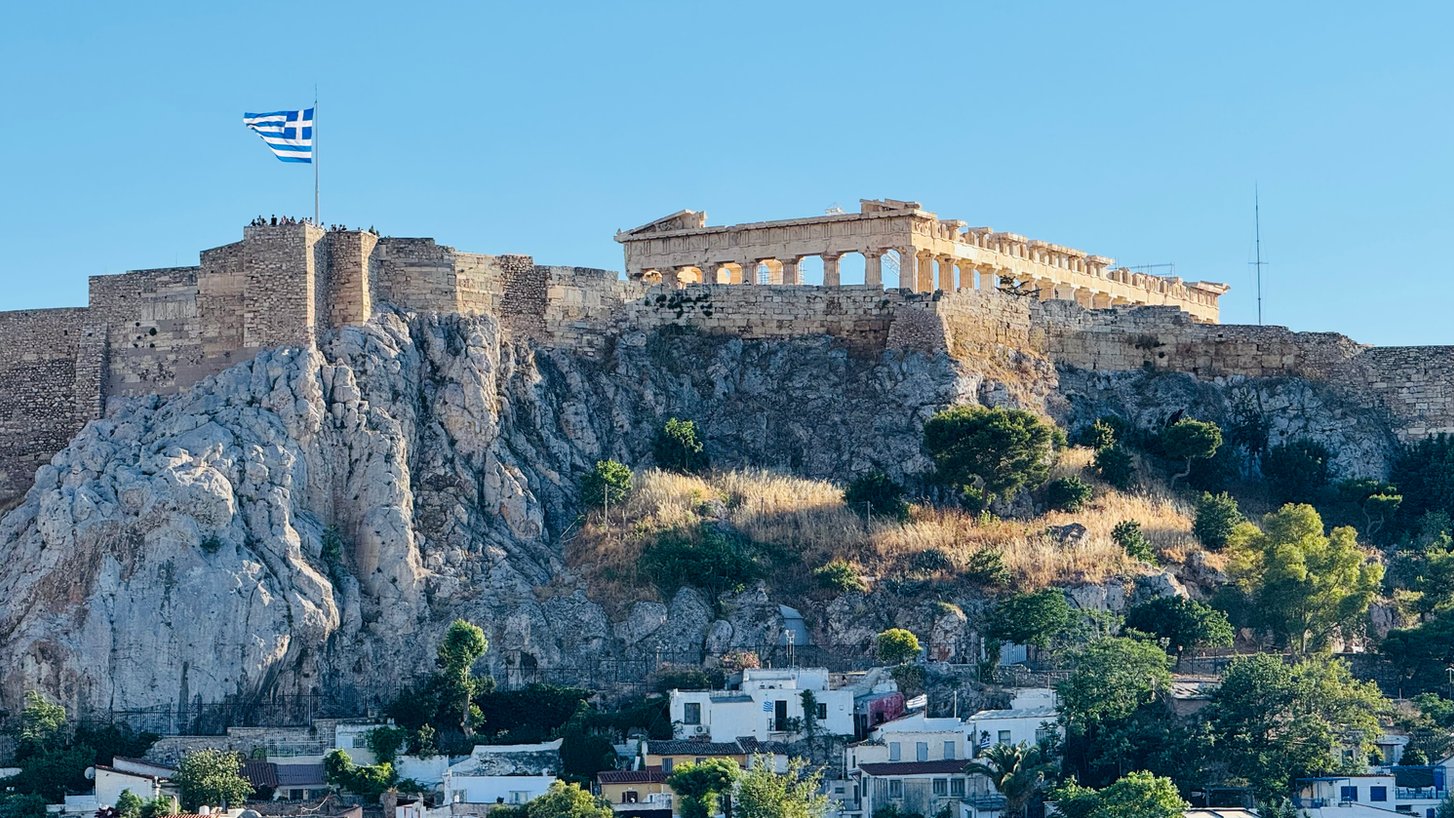
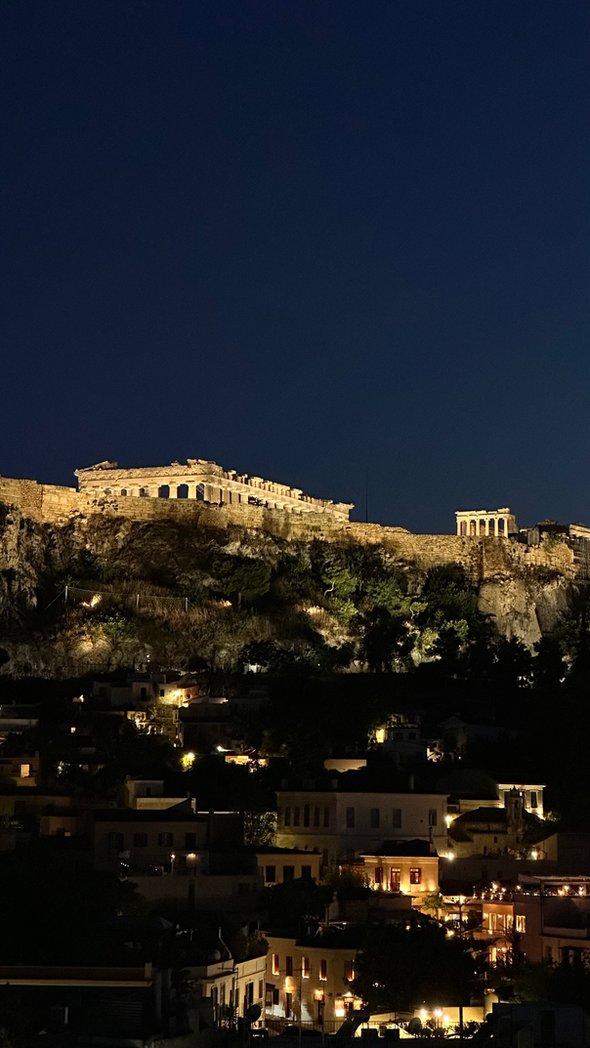
On the evening of Thursday, 18 June, the rooftop of Central Hotel in Athens — its Thea Terrace Bar, with the Parthenon glowing directly opposite — hosted a tasting dedicated to the PDO and PGI wines of Northern Greece. The event was organised by ENOAVE, the Wine Producers of Northern Greece Association, with the support of the European Union.
For an international audience, the symbolism of the setting was hard to miss: Northern Greek wine — quietly one of the most exciting and least understood corners of the Mediterranean — poured a few hundred metres from the foundational monument of Western civilisation.
ENOAVE and the Northern Greek vineyard
ENOAVE (the Greek acronym for Ένωση Οινοποιών Βορείου Ελλάδος, the Wine Producers of Northern Greece Association) has spent decades building a contemporary identity for Greek quality wine. Its work emphasises the region’s indigenous varieties alongside well-judged international ones, the ongoing evolution of viticulture, and the wider dissemination of wine culture beyond the trade.
Northern Greece is not a single appellation. It is a band of climatically diverse vineyards stretching from Epirus in the west, across Western and Central Macedonia, to Eastern Macedonia and Thrace, with Thessaly and parts of the Halkidiki peninsula included. Cooler-climate, higher-elevation sites produce structured, age-worthy reds and tense, mineral whites — a different proposition from the sun-baked Mediterranean wines many international buyers still assume “Greek wine” must be.
Which PDOs and PGIs were poured
The event’s tasting selection included wines bearing geographical indications from across the region:
- PDO Naoussa — the spiritual home of Xinomavro, Northern Greece’s flagship red.
- PDO Zitsa — high-elevation Epirus, classically associated with the Debina variety, in still and sparkling form.
- PGI Plagies Paikou — the slopes of Mount Paiko in Central Macedonia.
- PGI Drama — Eastern Macedonia, an internationally recognised PGI for both indigenous and international varieties.
- PGI Imathia — adjacent to Naoussa, with comparable terroir potential.
- PGI Pangaio — Mount Pangaion, also in Eastern Macedonia.
- PGI Velvendo — in the Kozani region of Western Macedonia.
Across these wines, guests encountered a wide spectrum of Northern Greek terroir expression: the structure and savoury intensity of Xinomavro, the freshness, minerality and aromatic clarity of the whites, and the precision of the region’s sparkling category.
The point of PDOs and PGIs, ENOAVE’s presentation emphasised, is not only quality. These designations legally bind a wine to a specific place, to defined rules of production, and to a recognisable cultural and viticultural identity — a guarantee of origin in a market increasingly crowded with generic branding.

A note on responsible consumption
A deliberate thread running through the evening was responsible wine consumption. Wine was presented not as alcohol to be consumed in quantity but as a product of culture, measure, flavour and conscious enjoyment. Carefully chosen food pairings and an atmosphere that was relaxed but precise — the opposite of a noisy industry event — made the point on their own terms.
It is a useful corrective. In international markets where wine is often framed either as a luxury collectible or as an alcoholic beverage to be priced against beer and spirits, the Greek tradition of wine as gastronomic culture — wine at the table, alongside food and conversation — remains one of the country’s quieter exports.
Why it matters
For sommeliers, importers and the broader hospitality trade, the takeaway from the evening is straightforward: Northern Greek PDO and PGI wines deserve more list space than they currently get. The diversity is now serious — more than 500 PDO and PGI wines are produced in the region — and the technical level is at par with established European appellations. The pricing, for the moment, is not.
The Acropolis backdrop was a reminder of the cultural depth behind these bottles. The wines, on the night, made the case on their own.