
The short answer
Xinomavro (Ξινόμαυρο) is the great red grape of Northern Greece. Its name means “sour-black”, and its wines are defined by bright acidity, firm tannins and remarkable ageing potential rather than by deep colour or sweet fruit. It is the sole grape of PDO Naoussa and PDO Amyntaio, and the backbone of PDO Goumenissa and PDO Rapsani — the reason it is so often mentioned in the same breath as Nebbiolo and Pinot Noir.
The name and the grape
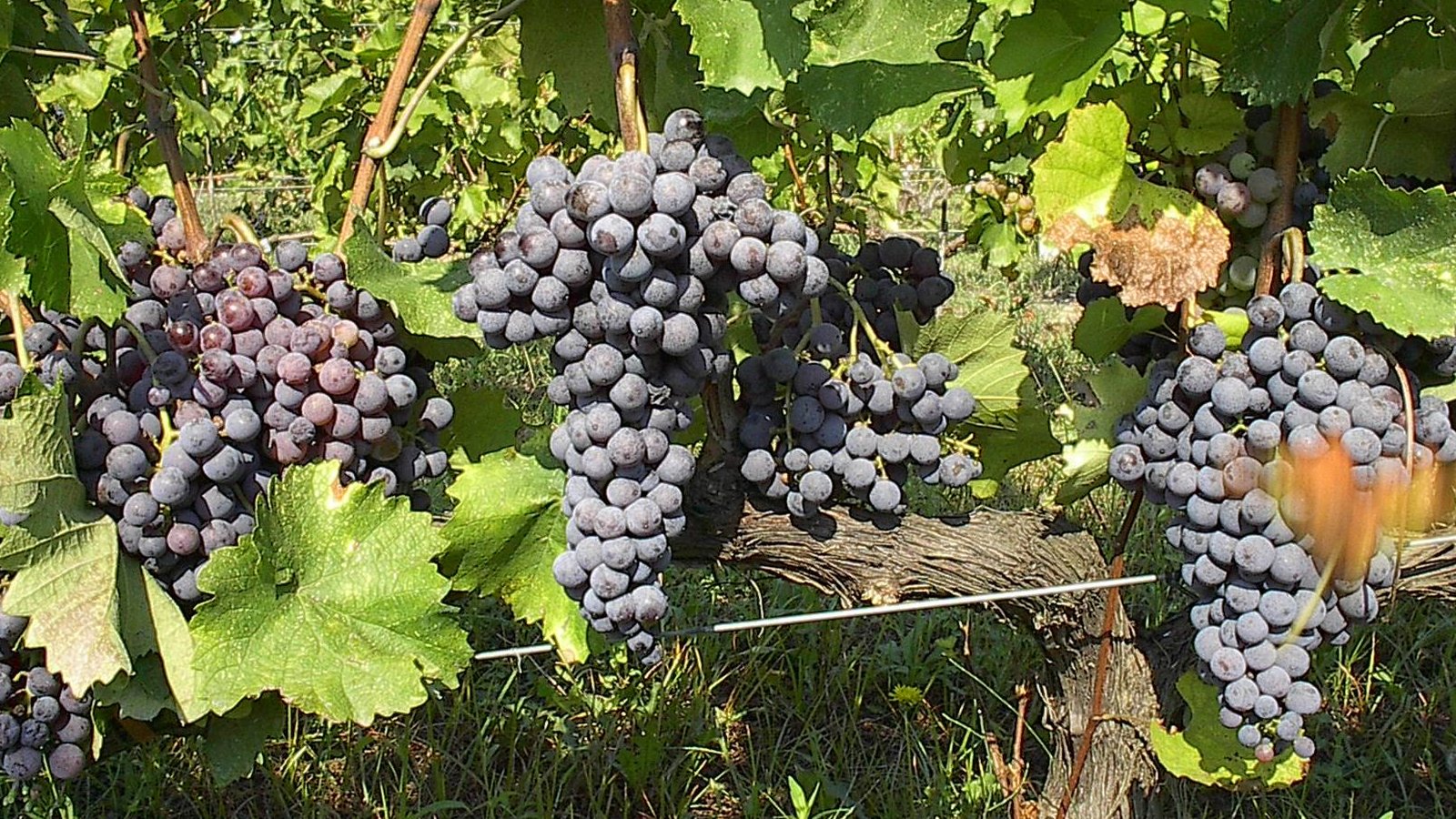
The name joins two Greek words: xino (sour) and mavro (black). The “sour” is accurate — high natural acidity is the grape’s signature. The “black” is less so: as Wines of Greece notes, the skins are not especially rich in colour, and the wines are typically a bright, relatively light red.
In the vineyard, Xinomavro is demanding. It is late-ripening and sensitive to disease, and it performs best in cool, well-ventilated sites with low yields. Hillside and higher-altitude vineyards extend the growing season, letting the tannins ripen fully while the acidity stays fresh. That is why site selection matters so much for this grape.
Where Xinomavro grows: the four PDOs
Xinomavro is planted widely across central and northern Greece, but four protected appellations define it:
| PDO | Where | Grapes | Styles |
|---|---|---|---|
| Naoussa | South-eastern slopes of Mount Vermio, Imathia · 150–400 m | 100% Xinomavro | Red |
| Amyntaio | High plateau in Florina, near lakes Vegoritida and Petron · 570–750 m | 100% Xinomavro | Red, rosé, sparkling rosé |
| Goumenissa | Foothills of Mount Paiko, Kilkis | Xinomavro + at least 20% Negoska | Dry red |
| Rapsani | Slopes of Mount Olympus | At least ⅓ Xinomavro, at least ⅓ Krassato, remainder Stavroto | Red |
Naoussa, established in 1971, is the historic heartland and the most famous name — structured, savoury reds built for the cellar. Amyntaio, established in 1972, sits on a high plateau at 570–750 metres, and its PDO covers not only red but also rosé and sparkling rosé Xinomavro. In Goumenissa, the Negoska grape makes the wines somewhat softer than Naoussa and adds colour. On Mount Olympus, Rapsani blends Xinomavro with two local grapes, Krassato and Stavroto.
What does Xinomavro taste like?
A classic dry red Xinomavro typically shows:
- Colour: bright red, often lighter than its structure suggests.
- Aromas: red fruits, flowers, tomato, olive; subtle spice from oak.
- Palate: firm tannins, tight structure, bright acidity — more elegance than power.
- With age: earthy notes of mushroom and truffle, dried fruit, tobacco and nuts.
The tomato and olive notes are what surprise newcomers most. They are not a flaw: they are part of what makes Xinomavro taste unmistakably of Northern Greece.
How long does it age?
This is Xinomavro’s strongest card. Wines of Greece describes its bottle-ageing potential as “long and nothing less than remarkable”, and good PDO Naoussa can age well beyond a decade. Serious bottlings are usually released with at least two years of age, much of it spent in oak and bottle.
Young Xinomavro can feel austere. With time, the tannins soften, the fruit dries, and the earthy, savoury layers take over — which is exactly why collectors cellar it.
Beyond red: rosé, sparkling and sweet
Xinomavro is more versatile than its reputation as a cellar red suggests. Wines of Greece lists dynamic rosés, aromatic sparkling wines and idiosyncratic sweet wines alongside the classic reds. The high acidity that makes the reds age so well also makes Xinomavro a natural base for rosé and traditional-method sparkling, and PDO Amyntaio includes sparkling rosé among its permitted styles. For more, see our guide to Greek Sparkling Wines.
Xinomavro, Nebbiolo and Pinot Noir
The international comparisons are not just marketing shorthand. Like Nebbiolo (Barolo, Barbaresco) and Pinot Noir (Burgundy), Xinomavro pairs a relatively light colour with high acidity, firm structure and long ageing potential. Wine Enthusiast puts it plainly: the wine’s energy, complexity, finesse and ageing potential place it alongside Burgundian Pinot Noir and Piedmontese Nebbiolo — while remaining far more affordable.
The aromas diverge, though. Where Barolo leans towards rose and tar, Xinomavro leans savoury and Mediterranean: tomato, olive, dried herbs.
If you are deciding between Greece’s two best-known reds, our Xinomavro vs Agiorgitiko comparison sets them side by side.
Producers to know
A starting list across the four appellations:
- Boutari (Naoussa) — its Grande Reserve Naoussa spends two years in French oak and two more in bottle before release; a classic, oak-aged expression of the appellation.
- Domaine Thymiopoulos (Naoussa) — Earth and Sky (Ghi ke Ouranos): 100% Xinomavro from certified-organic parcels in the villages of Trilofos and Fytia.
- Alpha Estate (Amyntaio) — the single-vineyard Hedgehog Xinomavro, from vines at 620–710 metres on the Amyntaio plateau.
- Karanika (Amyntaio) — a traditional-method sparkling specialist working with Xinomavro.
- Chatzivaritis (Goumenissa) — organically farmed Goumenissa blending Xinomavro with Negoska.
- Tsantali (Rapsani) — Rapsani Reserve, an equal blend of Xinomavro, Krassato and Stavroto from the south-eastern slopes of Mount Olympus.
- Kir-Yianni (Naoussa) — Ramnista, a PDO Naoussa Xinomavro.
At the table
Xinomavro’s acidity and tannin make it a food wine first. The classic match is slow-cooked lamb or goat with tomato and herbs: the acidity cuts through the richness, the tannins meet the protein, and the wine’s own tomato-and-herb character mirrors the dish.
Other pairings that work:
- Greek stews: kokkinisto, stifado, giouvetsi.
- Game: venison, wild boar, hare.
- Mushrooms: wild mushroom risotto or pies; truffle dishes with older bottles.
- Hard aged cheeses: kefalotyri, aged graviera, parmesan.
- Tomato-based pasta and grilled red meat for younger, fresher styles.
Why it matters
Xinomavro is the clearest answer to the idea that Greek wine means only sunshine and easy-drinking whites. From cool hillsides and high plateaus, it makes savoury, structured, age-worthy reds that stand comparison with Europe’s great cellar wines — and it does so at prices that remain accessible. For anyone exploring Greek red wine, this is the grape to understand first.
Find the perfect Greek wine for what you’re eating
Use e-SOM, our digital sommelier, to pair Greek wine with your food — or even with your mood. Free, fast, available in English and Greek.
See also: Naoussa: A Complete Guide · Xinomavro vs Agiorgitiko · Greek Sparkling Wines · What Is Limnio?