
The short answer
The best Greek red wines for steak are Xinomavro from PDO Naoussa and oak-aged Agiorgitiko from PDO Nemea. Choose Xinomavro for fatty, well-marbled cuts such as ribeye: its high acidity and firm tannins cut straight through the richness. Choose oak-aged Agiorgitiko for fillet, sirloin or steak with a sauce: it is rounder, fruitier and softer. For a grilled steak with a fresher, more modern profile, try Limniona from Thessaly — above all the bottlings of Ktima Zafeirakis. For a charred, peppery steak and a special bottle, look for Mavrotragano from Santorini. This article is the red-wine partner to our Best Greek Whites for Fish.
Why red wine works with steak
Two things make a red wine good with steak: tannin and acidity.
- Tannin meets protein and fat. Tannins bind with the protein and fat in the meat, so the wine feels softer and smoother next to steak than it does on its own. A tannic red that seems firm by itself often opens up at the table.
- Acidity cuts richness. A fresh, high-acid wine refreshes the palate between bites of fatty meat, so each mouthful tastes as good as the first.
The fattier the cut, the more tannin and acidity the wine can handle. The leaner the cut, the softer the wine should be. That simple rule is enough to choose among Greek reds.
Quick guide: the cut and the Greek red
| Steak | What it needs | Greek red to choose |
|---|---|---|
| Ribeye (well-marbled) | High acidity, firm tannin | Xinomavro (PDO Naoussa) |
| T-bone / porterhouse | Structure for two textures | Xinomavro, or an Agiorgitiko–Cabernet blend |
| Sirloin / strip | Medium structure, ripe fruit | Oak-aged Agiorgitiko (PDO Nemea) |
| Flank, skirt, grilled steak with herbs | Fresh acidity, firm but smooth tannin | Limniona (Thessaly) |
| Fillet (lean, tender) | Soft tannin, generous fruit | Oak-aged Agiorgitiko |
| Charred, peppered steak | Concentration, spice | Mavrotragano (Santorini) |
| Dry-aged beef | Savoury, earthy notes to match | Aged Xinomavro |
| Lean cuts, tartare, carpaccio | Lighter body, silky tannin | Limnio |
1. Xinomavro — the classic for rich cuts
Xinomavro is the great red grape of Northern Greece and the sole grape of PDO Naoussa, established in 1971. Its wines are built on high acidity and firm tannins rather than on deep colour or sweet fruit, with notes of red fruit, tomato and olive, and earthy, savoury layers as they age.
That structure is exactly what a well-marbled ribeye needs. The acidity cuts through the fat; the tannins meet the protein; the savoury, herbal character works beautifully with steak grilled over charcoal and seasoned the Greek way, with oregano, salt and olive oil.
- With aged beef: an older Naoussa, with its mushroom and earthy notes, mirrors the flavours of dry-aged meat.
- Young bottles: young Xinomavro can feel austere. Decant it for an hour, or choose a wine with a few years of bottle age.
- Beyond Naoussa: PDO Rapsani on Mount Olympus blends Xinomavro with the local Krassato and Stavroto grapes — a different, mountain-grown expression that is well worth trying with grilled meat.
The producers to know:
- Domaine Thymiopoulos (Trilofos, Naoussa) — Apostolos Thymiopoulos makes ten different expressions of Xinomavro. For steak, start with Earth and Sky (Ghi ke Ouranos): 100% Xinomavro, PDO Naoussa, from the estate’s best certified-organic parcels of 45-year-old vines — 70% around Trilofos (150–250 m) and 30% around Fytia (450–650 m) — aged 18 months in third-use 500-litre French oak.
- Ktima Kir-Yianni (Naoussa) — Ramnista, 100% Xinomavro, PDO Naoussa. The name means “royal hill” in the local idiom, after the rolling hills of the estate’s Naoussa vineyard; each vintage is a selection of the best parcels of that area, matured for 14 months in French oak. The estate itself recommends it with red meat and game.
- Dougos Winery (Rapsani, Mount Olympus) — the Dougos family has made wine at the foot of Olympus since 1992. Its organically farmed vineyards sit at 550–650 metres on the north-east slopes of the mountain, in the area of Prosilia, and it produces two PDO Rapsani wines — Rapsani and Rapsani Old Vines — from the blend of Xinomavro, Krassato and Stavroto. The Old Vines is the one for a serious steak.
Also worth seeking out: Boutari Grande Reserve Naoussa (two years in French oak and two in bottle before release) and Alpha Estate Hedgehog (single-vineyard Xinomavro from PDO Amyntaio).
2. Oak-aged Agiorgitiko — for fillet, sirloin and sauces
Agiorgitiko is the grape of PDO Nemea, Greece’s largest appellation for red wine. It comes in many styles, and the right one for steak is the oak-aged version. According to Wines of Greece, Agiorgitiko intended for ageing shows deep colour, a firm structure with ripe, high-quality tannins, and concentrated aromas of red fruit, sweet spices and chocolate.
That makes it rounder and more generous than Xinomavro. It is a natural choice for fillet and sirloin, where a very tannic wine could overpower the meat, and for steak served with a peppercorn, mushroom or red-wine sauce.
One caution: young, unoaked Agiorgitiko is a different wine — soft, fresh and fruity. It is lovely with burgers or grilled sausages, but it lacks the structure for a thick steak. Look for “reserve” styles or a mention of oak ageing on the label, and read our Nemea guide to understand the region’s altitude zones.
The producers to know:
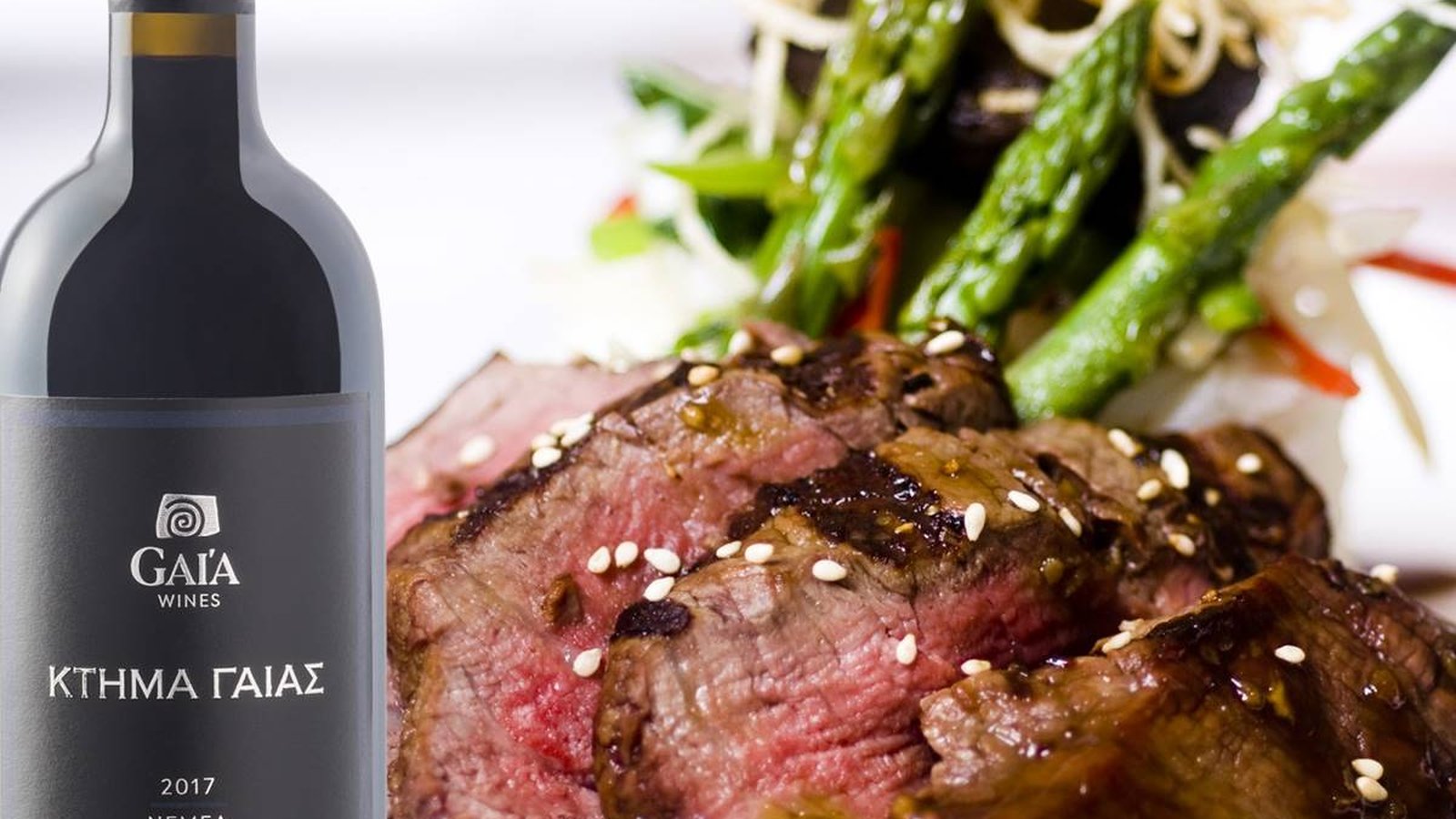
- Gaia Wines (Koutsi, Nemea) — Gaia Estate (Ktima Gaias), PDO Nemea: Agiorgitiko from the highest south-western slopes of Koutsi, matured for at least 12 months in new 225-litre French oak and bottled without filtration or cold stabilisation. The estate describes it as built for ageing — up to 20 years in a good cellar — and recommends decanting it for at least half an hour.
- Palivou Estate (Ancient Nemea) — a family estate, now in its third generation of growers, whose winery sits 800 metres from the archaeological site of Ancient Nemea. Ktima Palyvou Nemea is 100% Agiorgitiko from the Kokkinies site, aged 12 months in French oak and six months in bottle; the estate’s own serving suggestion is juicy red meat with rich red sauces.
Also worth seeking out: Domaine Skouras Megas Oenos, launched in 1986 as the first Agiorgitiko–Cabernet Sauvignon blend released in Greece. The Cabernet adds grip, making it a strong match for T-bone or ribeye; the estate says it needs at least five years in bottle to begin to open.
3. Limniona — Thessaly’s rising red for beef
Limniona is the rising star among Greek reds, and one of the most exciting bottles you can put next to a steak. First, a note that trips up many readers: Limniona is not Limnio. They are two different grapes, and Wines of Greece makes the point explicitly. Limniona comes from Tyrnavos in Thessaly, and it was revived there: it was rescued when only a few vines were left, after years of research and micro-vinifications by scientists, growers and producers.
In the glass, Wines of Greece describes an extremely deep, vivid purple-red colour, a rich nose of red fruit, herbs, minerality and cooking spices, and a palate with a firm, textured but never aggressive tannin frame balanced by bright acidity. It packs extract and concentration without heaviness. And Wines of Greece is unusually direct about the table: Limniona, especially when young, is excellent with beef and other rich red meats.
That makes it a superb match for a grilled steak with herbs, flank or skirt cooked hot and fast, or any cut where you want freshness as well as grip.
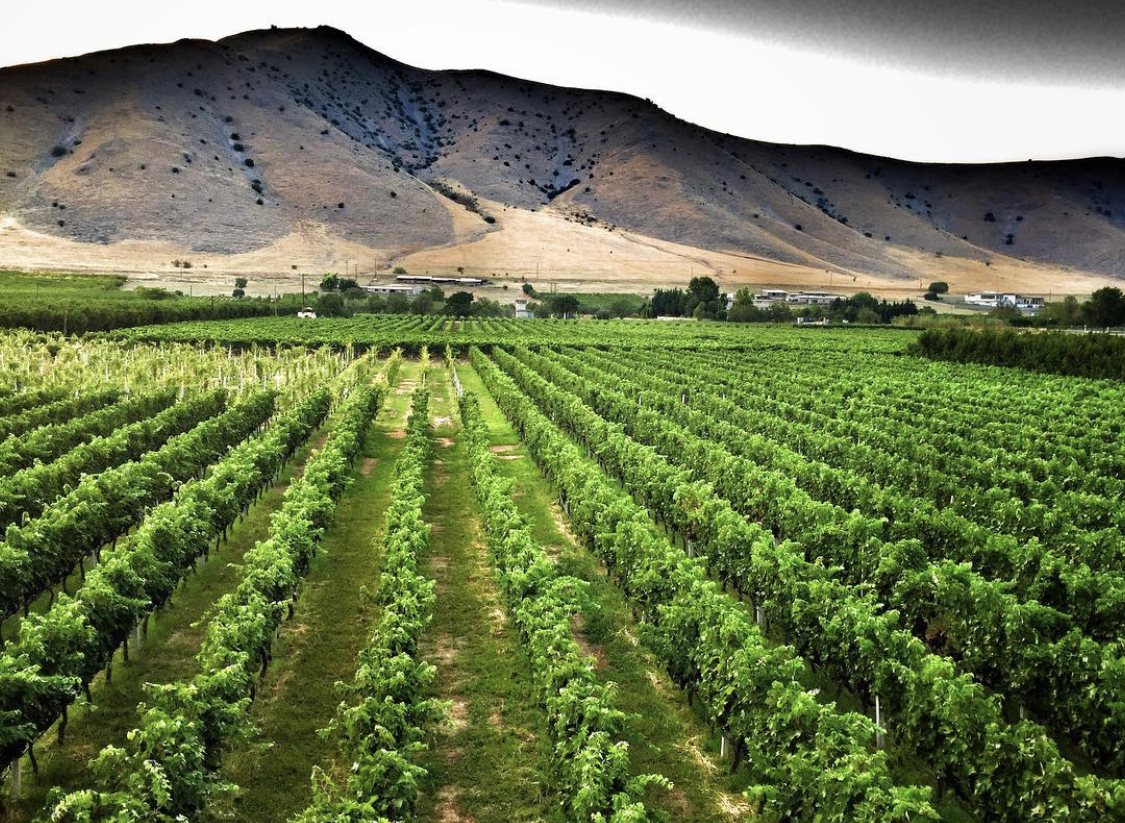
The producer to know: Ktima Zafeirakis (Tyrnavos, PGI Tyrnavos). The Zafeirakis family has farmed vines in Tyrnavos for more than a century; Christos Zafeirakis, the fourth generation, planted his first organic vineyard in 2005, and the estate has also farmed biodynamically since 2019. It is the producer most credited with bringing Limniona back, and its range shows the grape from several angles: the fresh Limniona Young Vineyards, the estate Limniona, and the amphora-aged Limniona Terra Cotta. According to the estate, Wine & Spirits rated its Limniona 2020 at 95 points. For a steak, the estate Limniona is the natural first bottle.
4. Mavrotragano — the rare choice for charred, peppery steak
Mavrotragano was almost extinct until Santorini’s growers searched the island’s volcanic vineyards vine by vine and brought it back. Wines of Greece describes wines with dense colour, concentration and richness, robust tannins, and aromas of smoke, coffee and sweet red fruit.
That smoky, concentrated profile is a natural partner for a charred, peppered steak or a thick cut cooked over wood. It is a small-production wine, so treat it as the bottle for a special dinner rather than a weeknight steak.
The producer to know: T-Oinos (Tinos, Cyclades). On the neighbouring island of Tinos, T-Oinos grows Mavrotragano on the granite terraces of its Rassonas vineyard. Its Clos Stegasta Mavrotragano Rare — 100% Mavrotragano — is one of the most acclaimed Greek reds of recent years: the 2022 was scored 99/100 by James Suckling.
Also worth seeking out on Santorini: Domaine Hatzidakis (among the first single-varietal Mavrotragano, from the 1997 vintage) and Estate Argyros (100% Mavrotragano, aged in French oak).
5. Limnio — the lighter option
Not every steak dish wants a big wine. Limnio — a different grape from Limniona, and one of Greece’s most ancient — has moderate colour, silky tannins and aromas of fresh herbs and red berries. It is a good choice for lean cuts, steak tartare, beef carpaccio, or a lighter lunch — anywhere a powerful red would feel heavy.
The producers to know:
- Ktima Gerovassiliou (Epanomi) — Avaton, PGI Epanomi: a blend of three indigenous reds — Limnio, Mavroudi and Mavrotragano — in which Limnio predominates, matured in large 50-hectolitre oak vats. It is the fuller, more structured face of Limnio, and the estate pairs it with red-meat stews and game.
- Ktima Hatzigeorgiou (Lemnos) — a small family estate on the grape’s home island and the most internationally recognised Lemnos producer of varietal Limnio.
How to get the most from the pairing
- Temperature: serve these reds at about 14–17 °C. In summer, 15 minutes in the fridge before opening is rarely a mistake.
- Air: open young Xinomavro and Mavrotragano an hour before dinner, or decant them.
- Salt and char: a well-salted, well-charred crust makes a tannic wine taste smoother. Go easy on sweet glazes and ketchup-style sauces — sweetness makes dry red wine taste thin and bitter.
- The Greek way: a thick steak on the grill with sea salt, oregano and a drizzle of olive oil — and a bottle of Naoussa — is hard to beat.
Find the right bottle for your steak
For a pairing built around your exact dish — the cut, the sauce, even your mood — try e-SOM, our free digital sommelier. It is built on expert knowledge from wine professionals, and it is free to use in English and Greek. For a wider dish-by-dish reference, see the Greek food and wine pairing guide on e-SOM.
See also: Best Greek Whites for Fish · What Is Xinomavro? · Xinomavro vs Agiorgitiko · Mediterranean Cuisine Pairing