
The short answer
Domaine Gerovassiliou is one of the most important wineries in modern Greek history. Founded in 1981 by Evangelos “Vangelis” Gerovassiliou on family land at Epanomi south of Thessaloniki, the estate rescued the Malagousia grape from commercial extinction, built one of the country’s most visit-worthy wine-tourism destinations (with its 3,000-corkscrew wine museum), and now exports to more than 40 countries. If any single estate defines the modern era of Northern Greek wine, it is this one.
The founder
Vangelis Gerovassiliou trained in Bordeaux, at the University of Bordeaux II, in the late 1960s and early 1970s. His teacher was Professor Émile Peynaud — one of the most influential figures in 20th-century oenology, and the person whose teaching redefined Bordeaux itself. Gerovassiliou returned to Greece in 1976 and joined Domaine Porto Carras in Halkidiki as its oenologist, at a moment when the estate — established with Peynaud’s own consultancy — was one of the most technically advanced wineries in the country.
At Porto Carras, Gerovassiliou encountered something small and, at the time, unremarkable: a row of Malagousia vines in an experimental vineyard, planted from cuttings by Professor Vassilis Logothetis of the Aristotle University of Thessaloniki. The variety was thought to be nearly extinct, surviving only in a handful of neglected plots. Gerovassiliou took the material home.
The estate
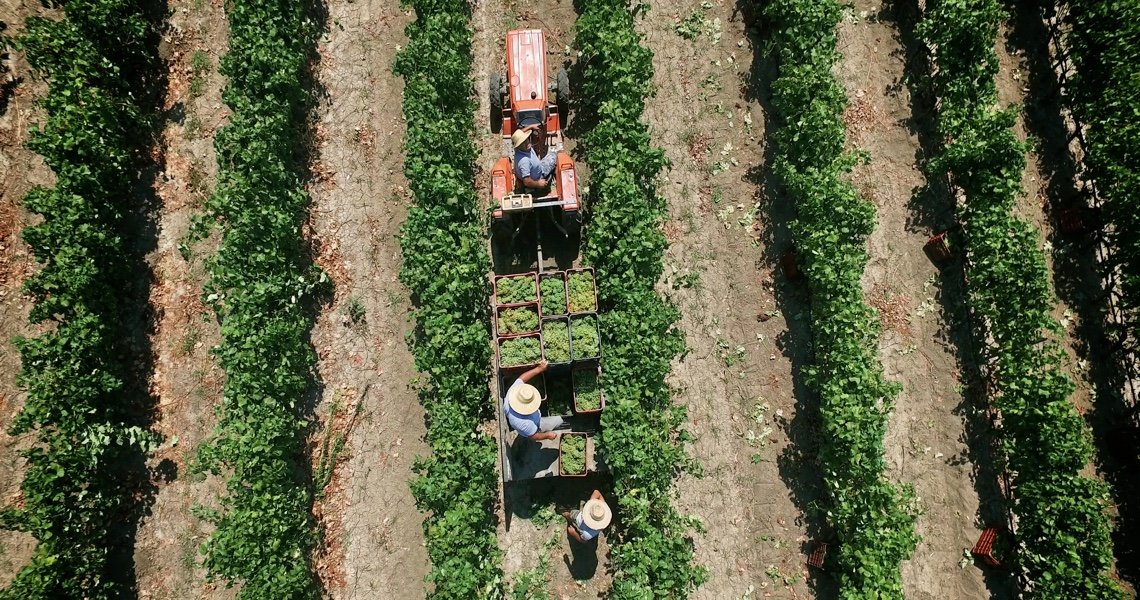
In 1981, Vangelis established Domaine Gerovassiliou on family land at Epanomi, in Central Macedonia — a rolling landscape of vineyards between Thessaloniki International Airport and the Thermaic Gulf, at low elevation but with excellent Aegean exposure and consistent maritime breezes. The estate today covers approximately 72 hectares of vineyards, all farmed by the domaine itself.
Most wines are bottled under the PGI Epanomi designation — a category that has come to be almost synonymous with Gerovassiliou’s own name in international markets.
The rescue of Malagousia
The first commercial varietal Malagousia appeared in the 1980s, and the estate has released one every vintage since. The wine caught the attention of Greek wine writers immediately; by the 1990s, it was on export markets; by the 2010s, it was widely reviewed in international press — Decanter, Wine Spectator, Jancis Robinson MW’s team.
Today, Malagousia is grown across Greece — Northern Greece (Halkidiki, Drama, Kavala), the Peloponnese (Mercouri, Skouras), Crete, Central Greece — and even outside the country, in California, Australia and Israel. Almost every commercial planting can be traced, directly or indirectly, back to the material Vangelis took from Porto Carras in the 1970s.
It is one of the most complete rescue stories in modern European wine.
For a fuller variety guide, see our dedicated What Is Malagousia? piece.
The wines
Domaine Gerovassiliou produces a wide range across whites, reds and rosés, all grown on the Epanomi estate. Key wines include:
Whites
- Malagousia — the standard varietal; the reference bottling.
- Single Vineyard Malagousia — from the estate’s oldest and best block; a benchmark for what serious Malagousia can be.
- Fumé — a Sauvignon Blanc / Fumé Blanc blend; unusual in Greek wine and highly regarded.
- Chardonnay — Burgundian-influenced but distinctly Aegean.
- Viognier — increasingly praised in international press.
- Assyrtiko-Malagousia — indigenous white blend combining Santorini structure with Epanomi aromatics.
Reds
- Avaton — the flagship. An indigenous blend of Limnio, Mavroudi and Mavrotragano, three of Greece’s rarest indigenous red varieties, aged in French oak. One of the most ambitious indigenous-grape reds produced in Greece.
- Syrah — Rhône-influenced, structured, well-regarded.
- Cabernet Sauvignon / Merlot — Bordeaux-style blend.
Other
- Rosé — Merlot/Syrah base; consistently praised.
- Sparkling — small production, traditional-method.
- Grande Cuvée — the top-tier wines, produced only in select vintages.
The Wine Museum
Opened in 2012, the Gerovassiliou Wine Museum at the estate houses one of the largest private corkscrew collections in the world — more than 3,000 corkscrews from across four centuries — alongside hundreds of other wine artefacts: bottles, glasses, tools, wine literature, and archival material from Greek and international wine history.
The museum is part of the standard visitor experience and is one of the reasons Domaine Gerovassiliou is considered among Greece’s most rewarding wine-tourism destinations. Combined visits (tasting + museum + estate tour) can be booked in advance and are well worth setting aside two hours for.
The second generation
The estate is now co-managed with the second generation: Vangelis’s son Argyris Gerovassiliou and his wife Marie-Nathalie Gerovassiliou, who have brought international marketing, export development and hospitality-side polish to the estate’s operation. Their involvement has driven the substantial growth in export markets over the last decade — the estate now sells to more than 40 countries — and has professionalised the visitor experience without diluting the technical heritage established by Vangelis.
Visiting practicalities
- Distance from Thessaloniki: ~25 km, 30 minutes by car.
- From Thessaloniki International Airport: ~15 minutes.
- Booking: required, via the estate’s visits page. Standard visit is a guided tour + museum + tasting.
- Best season: any time of year (indoor museum + tasting room); harvest (late August–September) for the fullest experience.
- Combine with: the Royal Tombs of Vergina (UNESCO), the archaeological site of Pella (Alexander the Great’s capital), or a day in Thessaloniki itself.
Why it matters
For international wine buyers, Domaine Gerovassiliou is often the first serious Greek estate a portfolio adds. The range is consistent, the international presence is established, the technical execution is unimpeachable, and — importantly — the wines have a narrative that sells at the table.
For Greek wine as a whole, the estate is a proof-of-concept: that indigenous varieties (Malagousia most obviously, but also Limnio, Mavroudi and Mavrotragano through Avaton) can be brought back from obscurity and made competitive with anything Bordeaux or Napa produces — while remaining distinctly Greek in identity.
Find the perfect Greek wine for what you’re eating
Use e-SOM, our digital sommelier, to pair Greek wine with your food — or even with your mood. Free, fast, available in English and Greek.
See also: What Is Malagousia? · Seven Greek Wineries Every Wine Lover Should Know · What Is Limnio?