
The short answer
Malagousia (Μαλαγουζιά) is an indigenous Greek white grape that came within a hair’s breadth of disappearing in the 20th century. Rescued and reintroduced in the 1980s by oenologist Evangelos Gerovassiliou, it has become one of Greece’s most internationally celebrated whites, aromatic, balanced, and versatile at the table. It is the closest thing modern Greek wine has to a happy ending.
A grape that almost vanished
By the mid-20th century, Malagousia was practically extinct as a commercial variety. A few neglected vines survived in scattered plots in Central and Western Greece, the most often-cited refuge being old vineyards in Aetolia-Acarnania. The variety’s name appears in 19th-century ampelographic notes, but no winery was producing varietal Malagousia at scale.
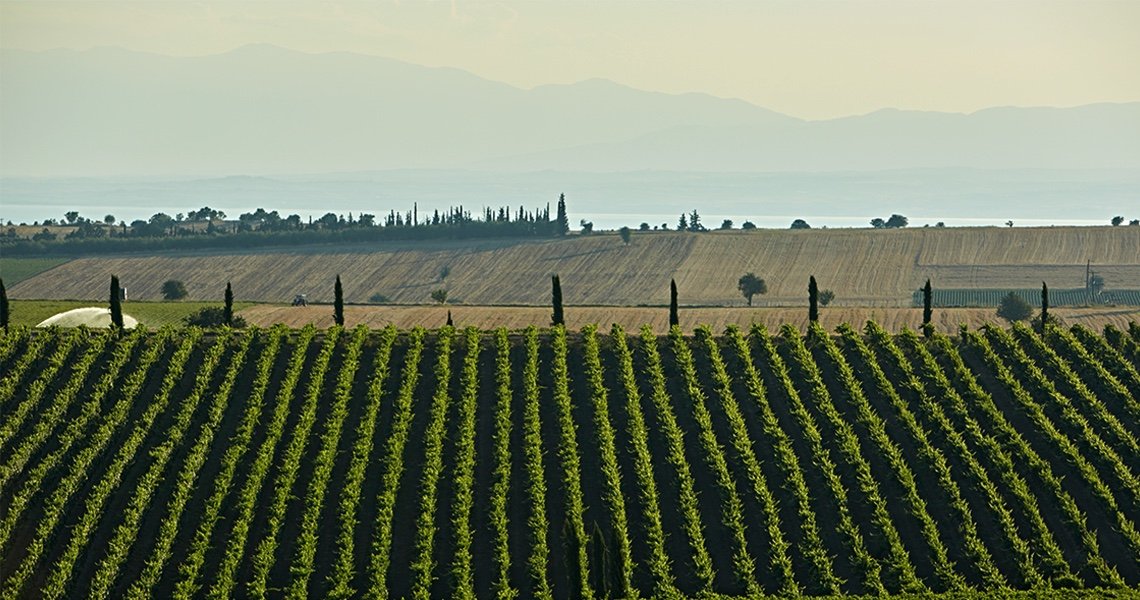
In the early 1970s, Professor Vassilis Logothetis of the Aristotle University of Thessaloniki collected cuttings and planted them in an experimental vineyard at Domaine Porto Carras in Halkidiki, where they came to the attention of a young oenologist, Evangelos Gerovassiliou, newly returned from his studies in Bordeaux under Émile Peynaud. Gerovassiliou took an interest in the variety, planted it in his own family vineyard in Epanomi (south-east of Thessaloniki), and from his first bottling in the 1980s established Malagousia as a serious commercial wine.
The success was immediate and lasting. Forty years on, Malagousia is grown across the country, exported internationally, and has even been planted experimentally in Australia, California and Israel. Few rescue stories in the wine world are this complete.
What does Malagousia taste like?
Malagousia is aromatic without being overwhelming, a key part of its broad appeal. A typical dry Malagousia shows:
- Aromatics: peach, apricot, citrus blossom, jasmine, basil, fresh mint, and a faint white-pepper lift.
- Body: medium, occasionally medium-full when fermented in oak.
- Acidity: balanced, fresh enough to stay food-friendly, but rounder than Assyrtiko or Sauvignon Blanc.
- Finish: softly herbal, sometimes with a saline mineral edge in coastal expressions.
It sits stylistically between an aromatic Viognier and a fresher Sauvignon Blanc, with a Mediterranean herbal character that is its own. The barrel-fermented versions add toasted-almond and waxed-lemon notes without overshadowing the variety’s distinct floral signature.
Where is Malagousia grown today?
Although Gerovassiliou established Malagousia commercially at Epanomi (PGI Epanomi) in Central Macedonia, the variety has now spread widely:
- Northern Greece: Halkidiki, Drama, Kavala, Florina, including high-elevation plantings.
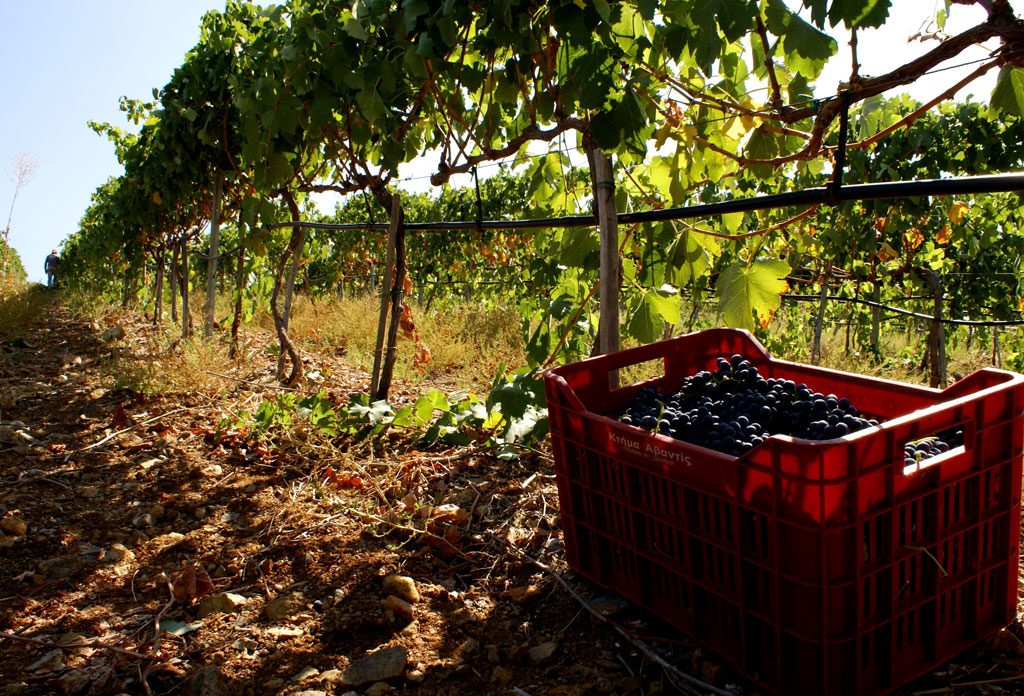
- Central Greece and Evia: notably Avantis Estate, who produce a much-praised Malagousia.
- Peloponnese: Domaine Skouras, Mercouri Estate and others have adopted it.
- Crete: trial plantings in the Heraklion region.
- Outside Greece: California (Long Meadow Ranch), Australia (Yalumba’s experimental block), and Israel (Recanati).
Most Greek Malagousia carries a PGI (Protected Geographical Indication) rather than a PDO designation, since the variety crosses many traditional appellation zones. PGI Epanomi, PGI Macedonia and PGI Halkidiki are among the most-seen labels internationally.
Leading producers to know
A short list of names that consistently deliver:
- Domaine Gerovassiliou (Epanomi), the benchmark. The standard varietal and the Single Vineyard Malagousia are essential reference points.
- Avantis Estate (Evia), fresher, more citrus-driven style.
- Domaine Costa Lazaridi (Drama), broader, riper-fruited expression.
- Mercouri Estate (Olympia, Peloponnese), sun-drenched, peachier style.
- Alpha Estate (Amyntaio), high-elevation precision; their Single-Block Malagousia is exceptional.
- Domaine Tetramythos (Aigialeia), mountain-grown, distinctly tense.
At the table
Malagousia is one of the most food-friendly Greek whites. Pairings that consistently work:
- Greek classics: grilled sardines, baked feta, dolmades, fresh Greek salad.
- Mediterranean cooking: anything with basil, mint, dill, oregano, or grilled vegetables.
- Seafood: sea bream, sea bass, octopus carpaccio, prawns and grilled calamari.
- Asian dishes: Thai green curry, Vietnamese herb-driven dishes, chilled noodle salads.
- Cheese: fresh goat’s milk cheeses, young Graviera, mild halloumi.
The wine’s herbal aromatics make it a particularly good bridge between Mediterranean and Asian cuisines, a pour that works equally well at a Greek taverna or a Thai restaurant.
Aged Malagousia: a quiet secret
Most Malagousia is sold and drunk young, but the barrel-fermented and single-vineyard versions from Gerovassiliou and Alpha Estate can develop wonderfully with 6 to 10 years in bottle. Aged Malagousia takes on honeyed, waxy, and faintly nutty characters while retaining the herbal lift that defines the variety. It is one of Greek wine’s most under-discussed cellaring opportunities.
How does Malagousia fit alongside Assyrtiko?
Of Greece’s two most internationally important indigenous whites:
- Assyrtiko is taut, mineral, age-worthy and uncompromisingly dry, a wine that demands food.
- Malagousia is aromatic, rounder, and immediately approachable, a wine that brings food to it.
Together they make the case for Greek wine internationally. Assyrtiko is the serious cellar pick; Malagousia is the wine that converts the table.
Why this matters
For anyone building a Greek wine programme (whether on a sommelier’s list, a hospitality buyer’s portfolio, or a personal cellar) Malagousia is essential. It is aromatic enough to compete with international varietal whites, distinctively Greek in character, and fairly priced for the quality at every tier. It is also a reminder that wine cultures can be rebuilt, vine by vine, when someone refuses to let a great variety disappear.
Find the perfect Greek wine for what you’re eating
Use e-SOM, our digital sommelier, to pair Greek wine with your food, or even with your mood. Free, fast, available in English and Greek.
See also: What Is Assyrtiko? · Seven Greek Wineries Every Wine Lover Should Know · Mediterranean Cuisine Pairing